




















Exhibition at NAI
2026-11-02 18:00 | Naregatsi Art Institute
"The Big Picture": When Daily Life in Syunik Becomes Exceptional Art
Photography is not merely a technique for capturing images; It is a spiritual ability to look at the world, see the invisible, and discover the extraordinary in the ordinary.
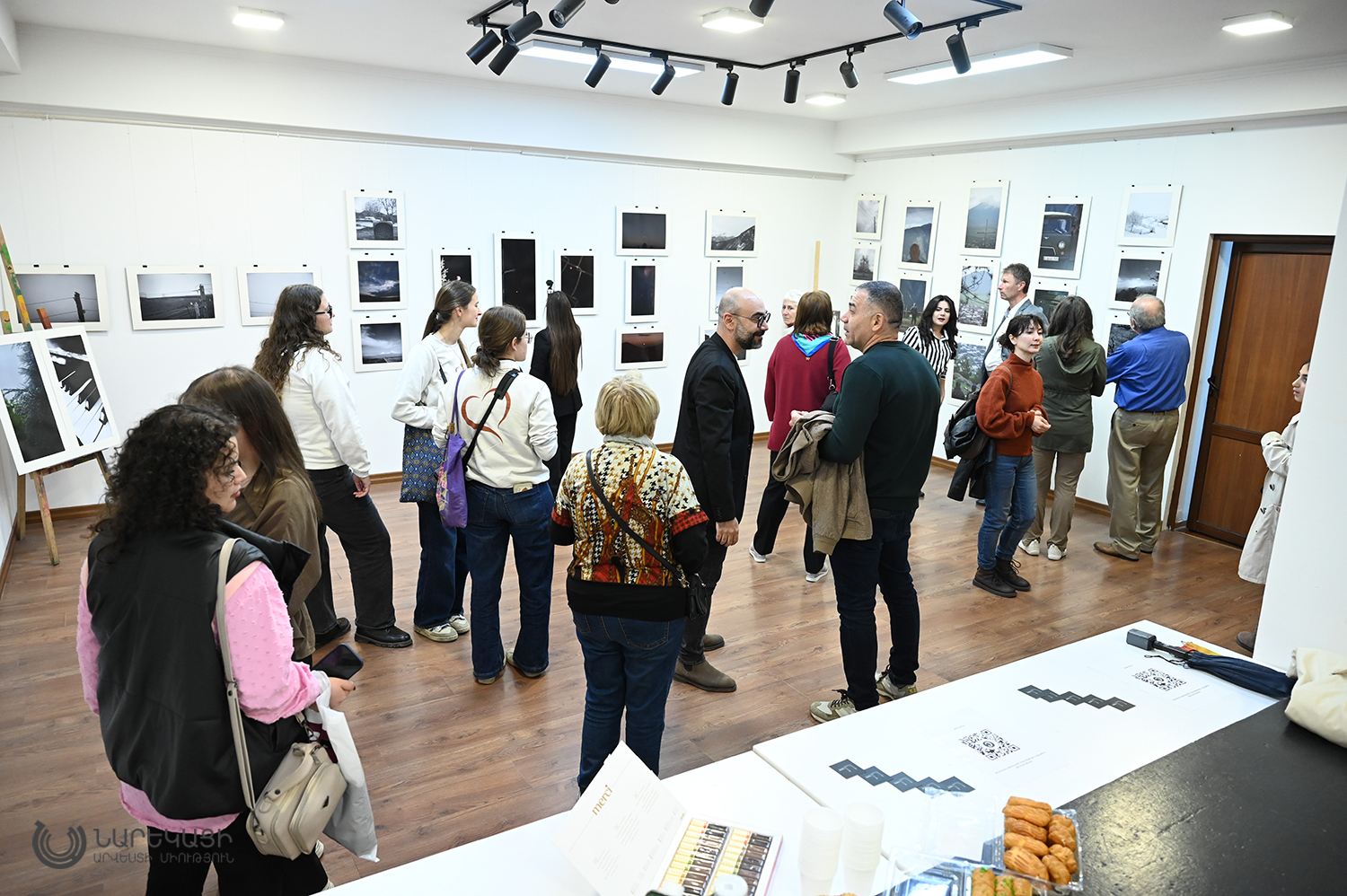
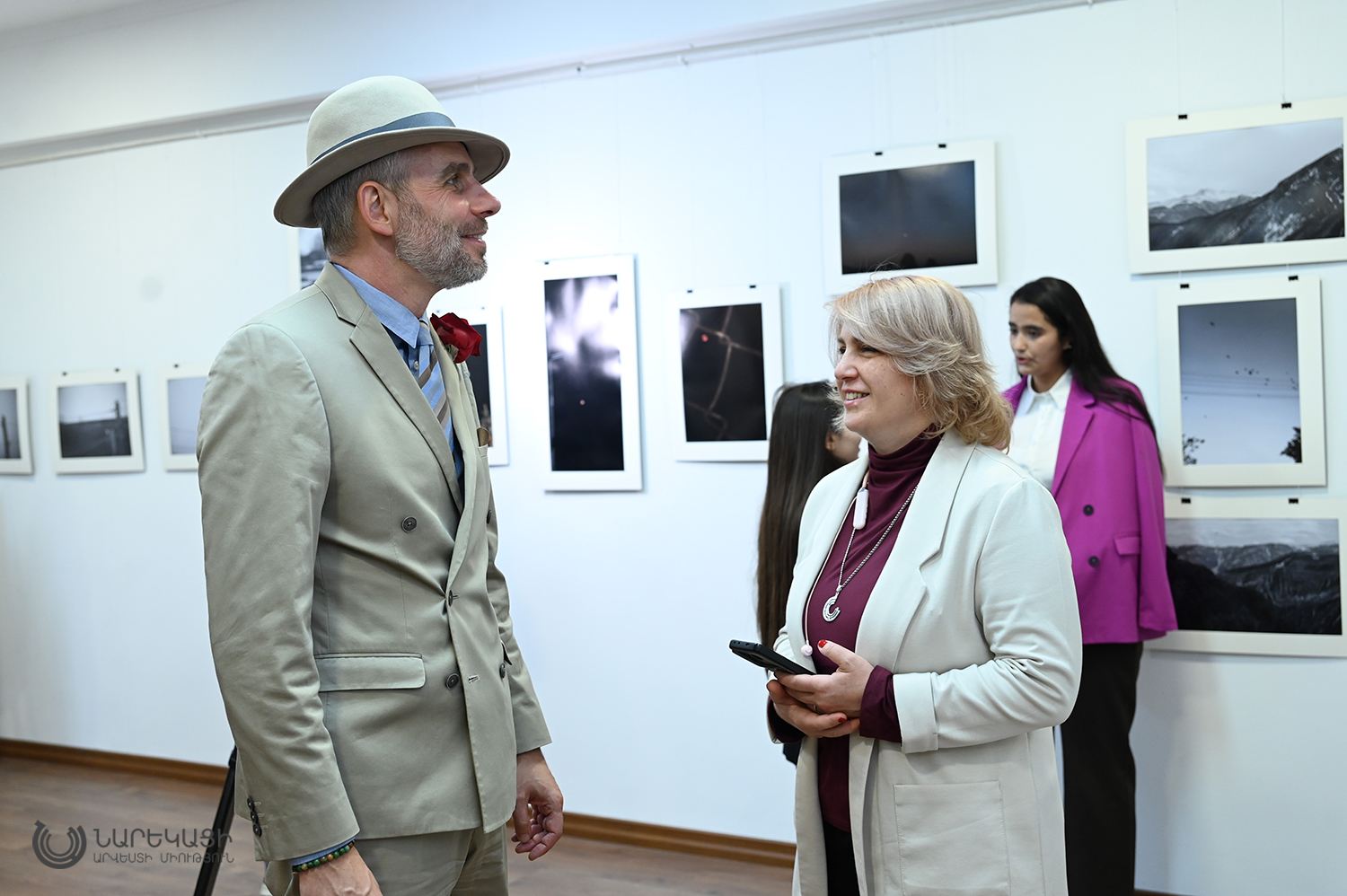
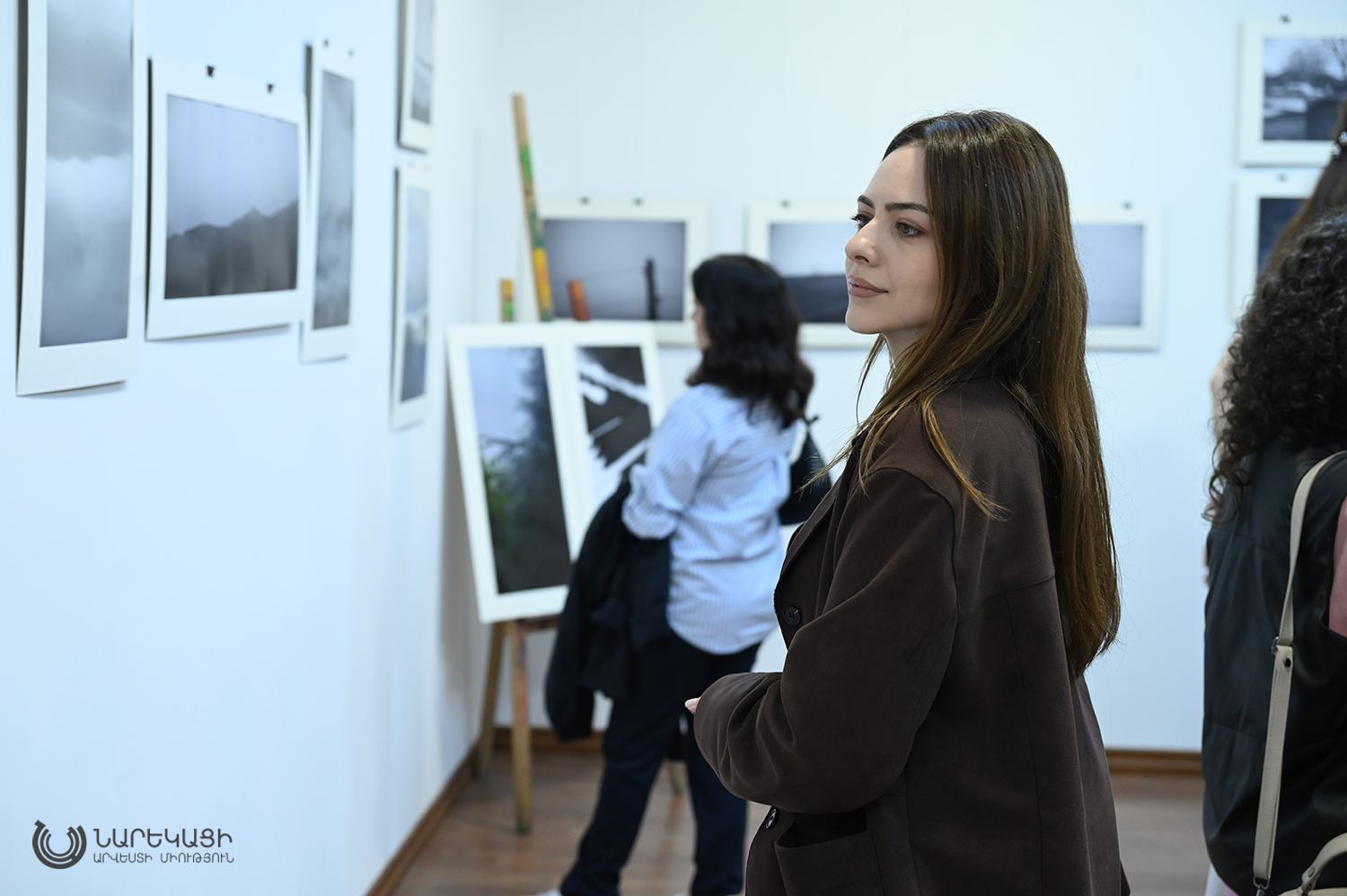
On November 2, Naregatsi Art Institute unveiled the photography exhibition “The Big Picture: - Chapter I: The Beautiful Quotidian”, which originated in the village of Harzhis, in Syunik, and evolved into a sincere wave of visual storytelling. From the gallery walls, the majestic mountains of Syunik, the tranquil village dawns, pigeons in flight against the backdrop of a sunset, and youths sitting deep in thought atop a truck kept watch.
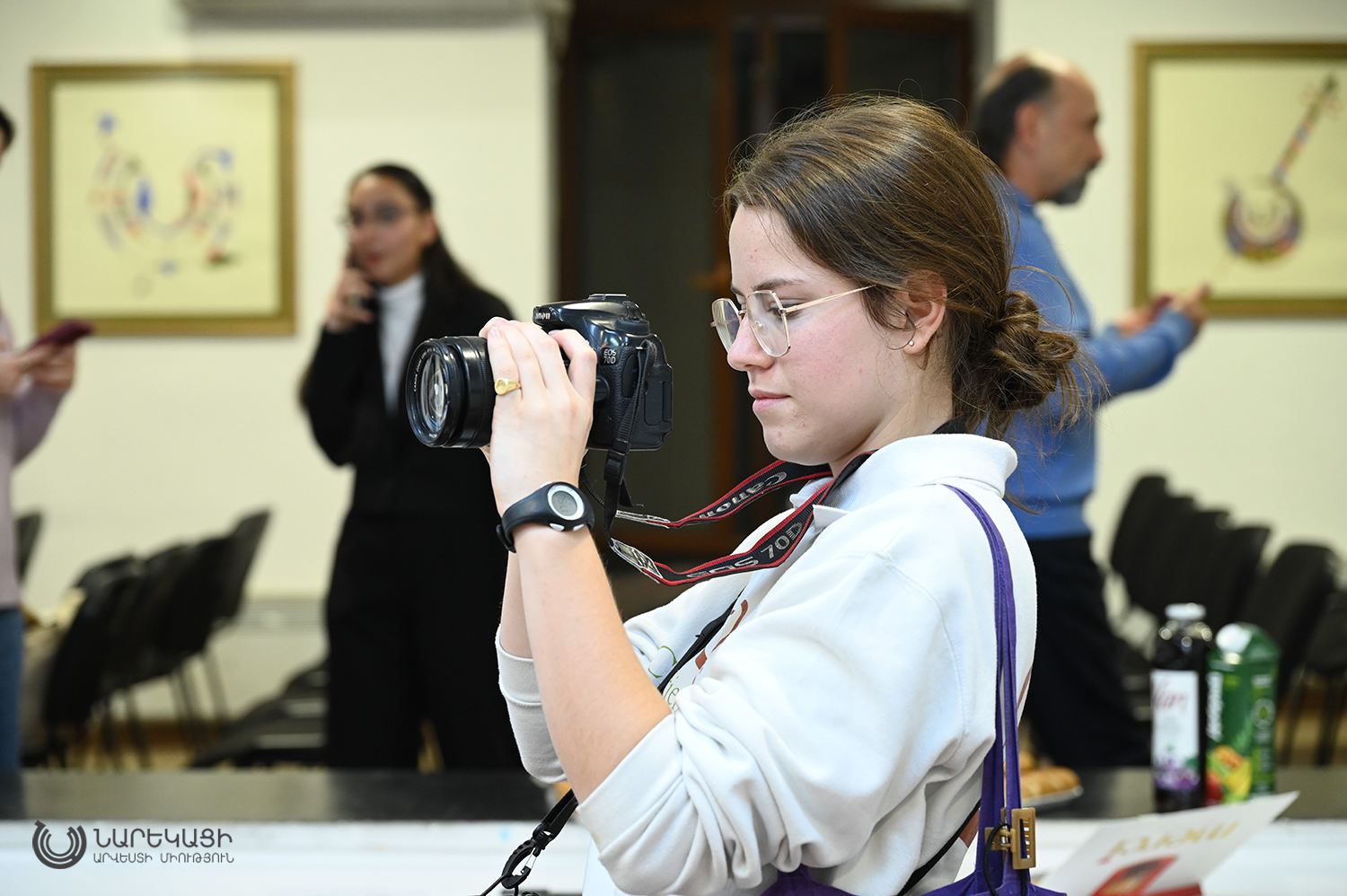
The exhibition featured the photographic works by young people from the village of Harzhis, Syunik region, created during a year-long interactive creative and visual storytelling group workshop in collaboration with director and photographer Essam Nagy, the founder of the Tserker Visual Arts Center. The project was brought to life through the initiative and support of the organization "SOS Christians of the East."
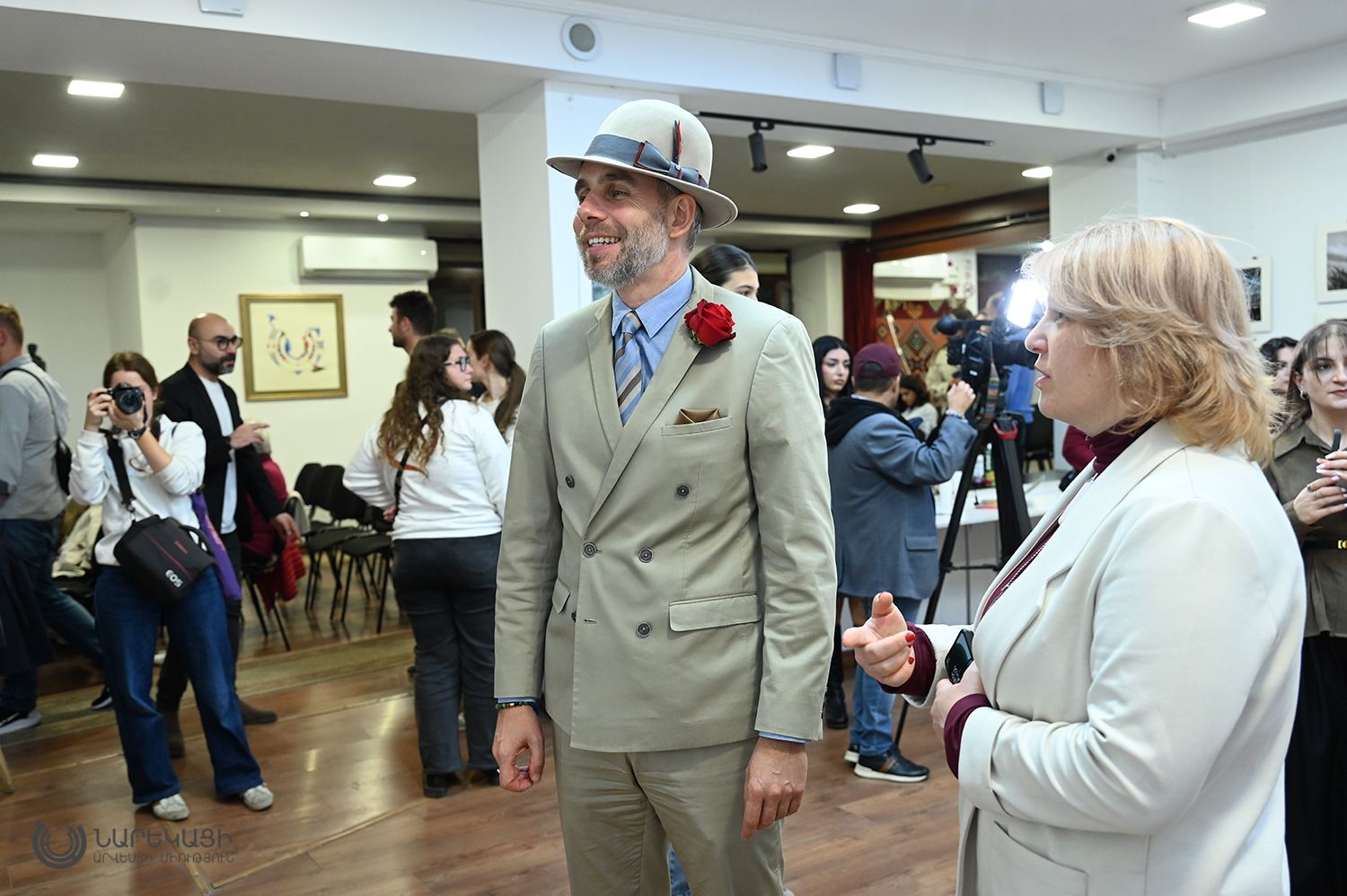
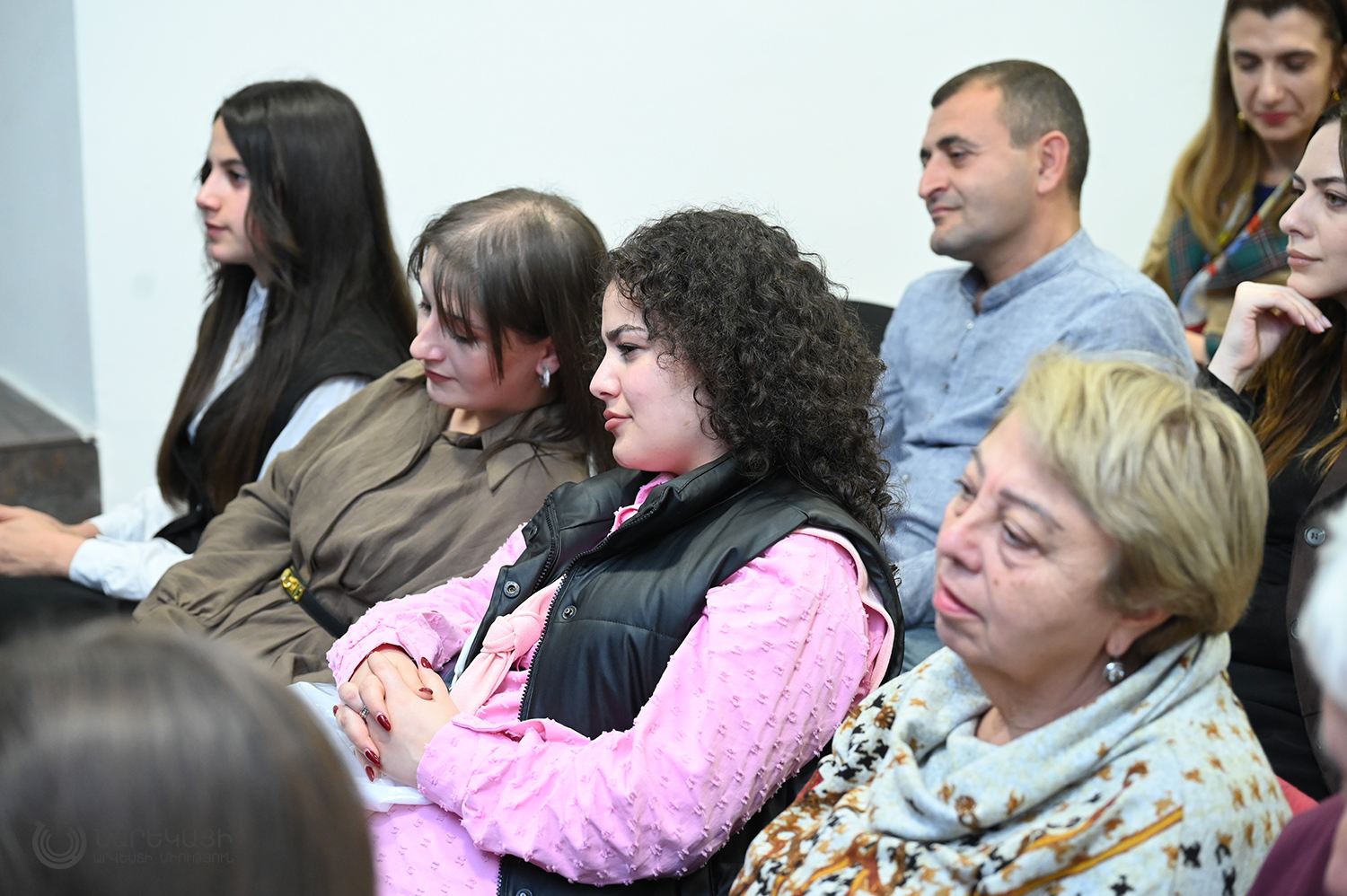
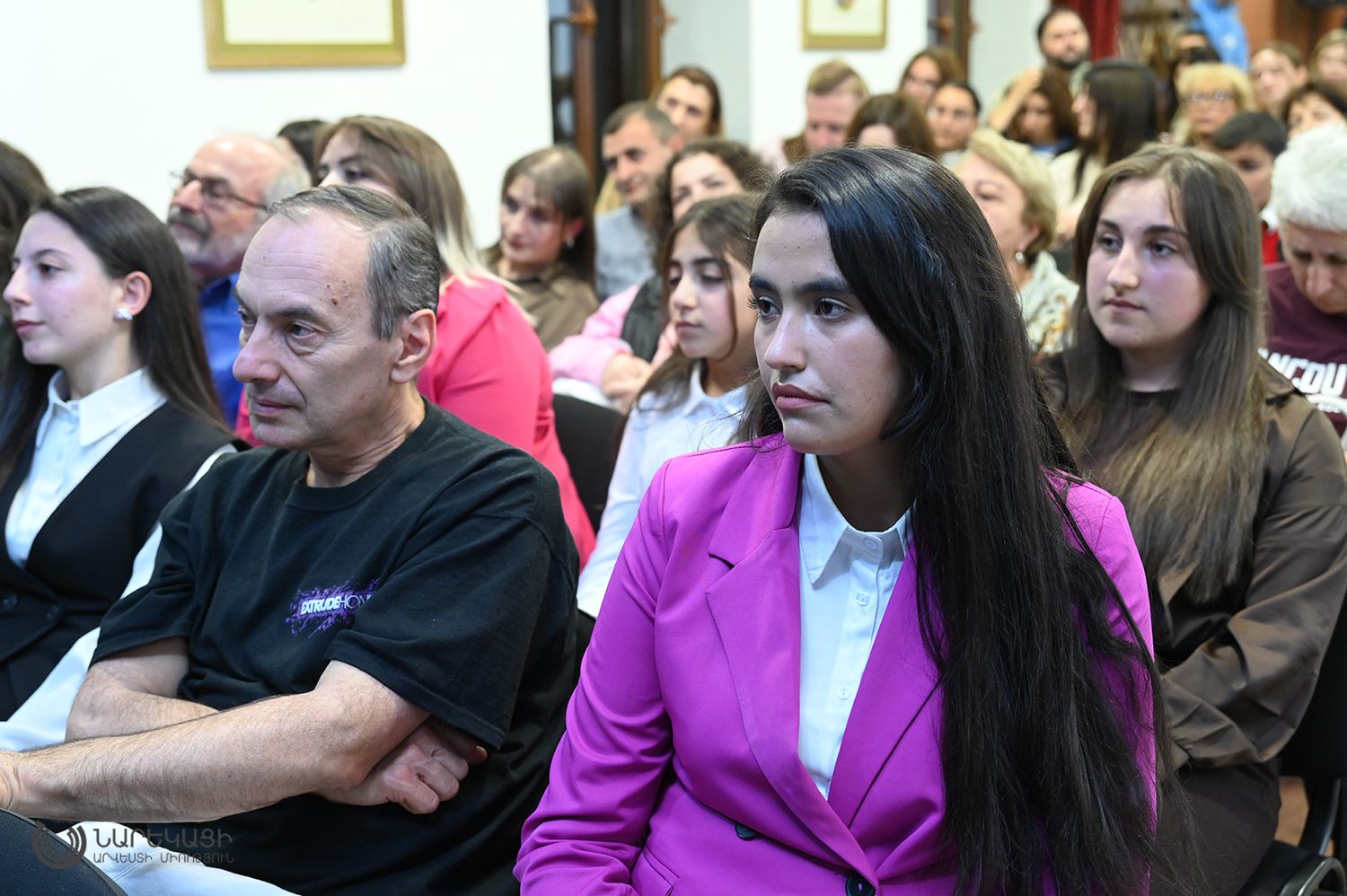
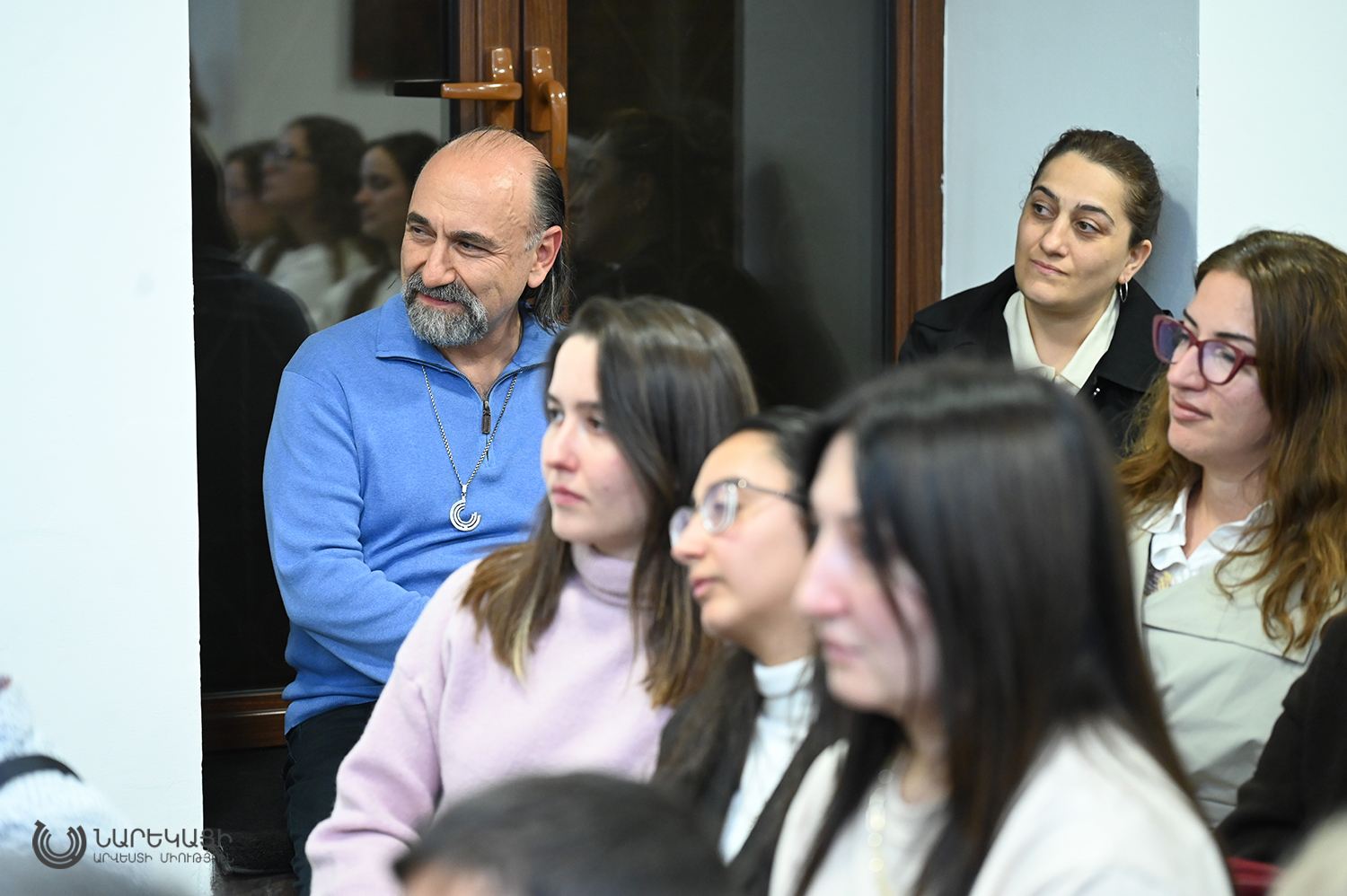
The event was attended by Petr Pirunčík, Ambassador Extraordinary and Plenipotentiary of the Czech Republic to the Republic of Armenia, as well as cultural figures and international experts.
The evening began with piano performances by Tigrane Kazazyan.
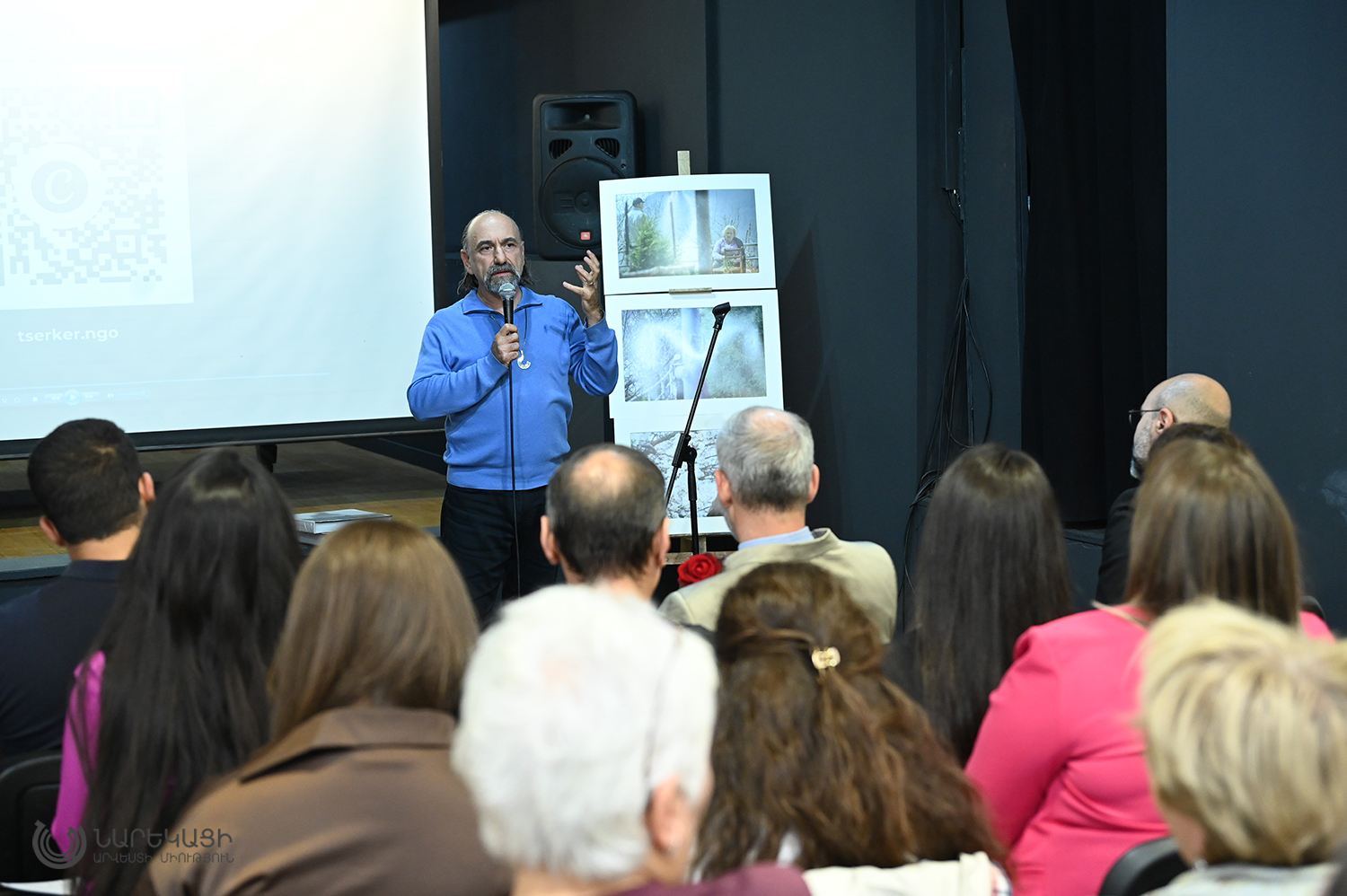
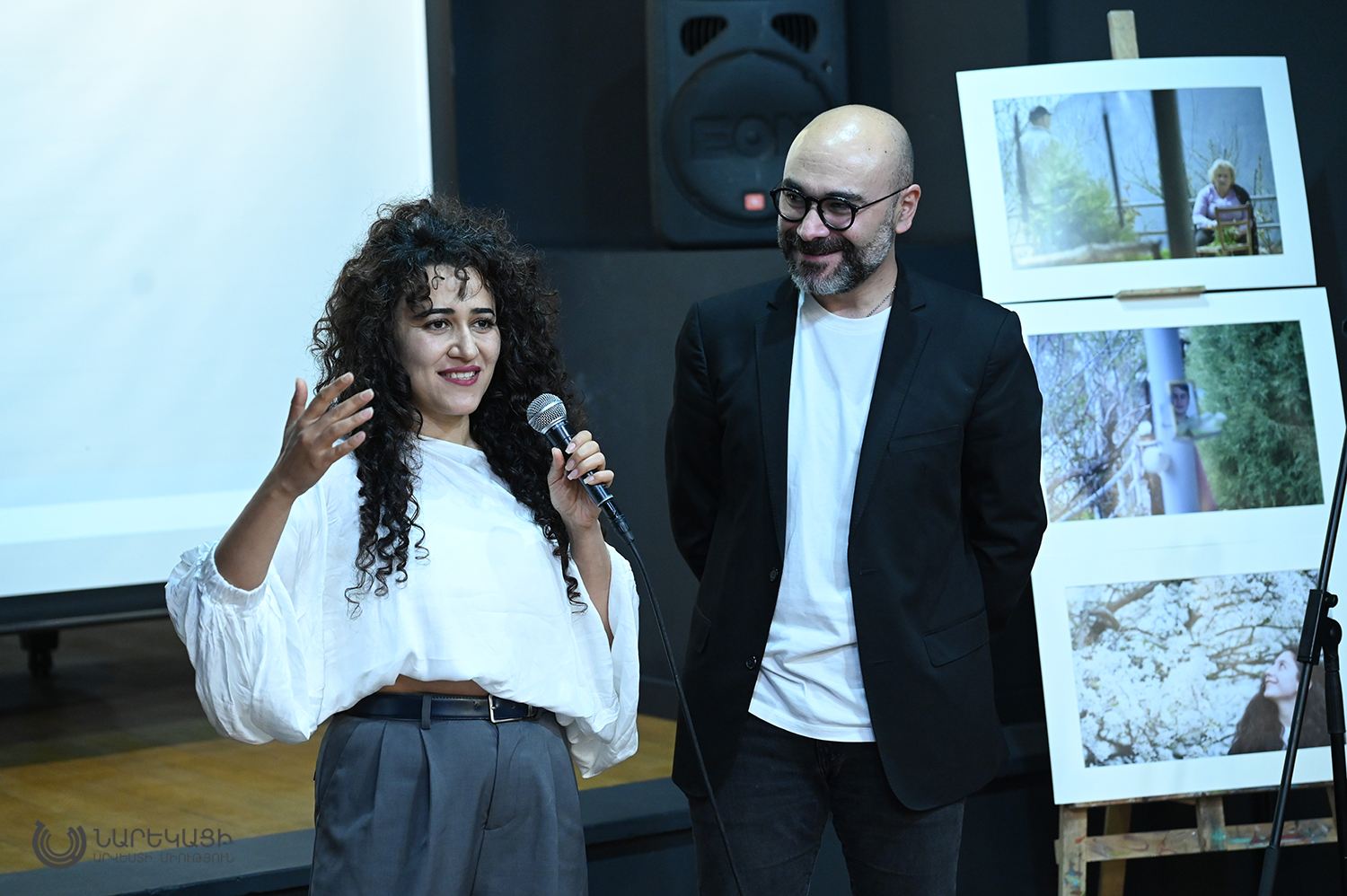
For project manager and artist Essam Nagy, this project was not just an educational course, but a spiritual communication with the youth of Syunik: “Thank you all for coming. Today we celebrate the discovery of new talents in Syunik. I am incredibly happy that this exhibition is being held at the Naregatsi Art Institute, which holds a very significant and special place in my heart.”
"Last year, while we were considering what courses to add for the teenagers benefiting from our centers, Essam Nagy mentioned during a meeting that he would like to organize a photography course and share his knowledge and experience with the youth. We liked the idea and suggested implementing it at the center in the village of Harzhis," recounted Aram Gayayan, Deputy Director of the Armenian branch of the organization 'SOS Christians of the East.' He emphasized that their goal is to provide support so that young people in border communities can preserve cultural values and continue living in their native villages. "We live in an environment, for example, in the rural communities of Syunik, where people live every day with their nature, mountains, and weather, but often do not stop to notice how beautiful it is. This gives young people an opportunity to stop and discover their birthplace with different eyes. The best reward for this year’s work was the moment today when the children entered the exhibition hall and saw their photographs. They didn't expect such an exhibition, such warmth. Their delighted eyes say it all."
Over the course of a year, the teenagers from Harzhis have mastered the nuances of lighting, focusing, framing, night photography, and even drone cinematography. Yet, their greatest achievement is the ability to see a profound story behind an ordinary shot.
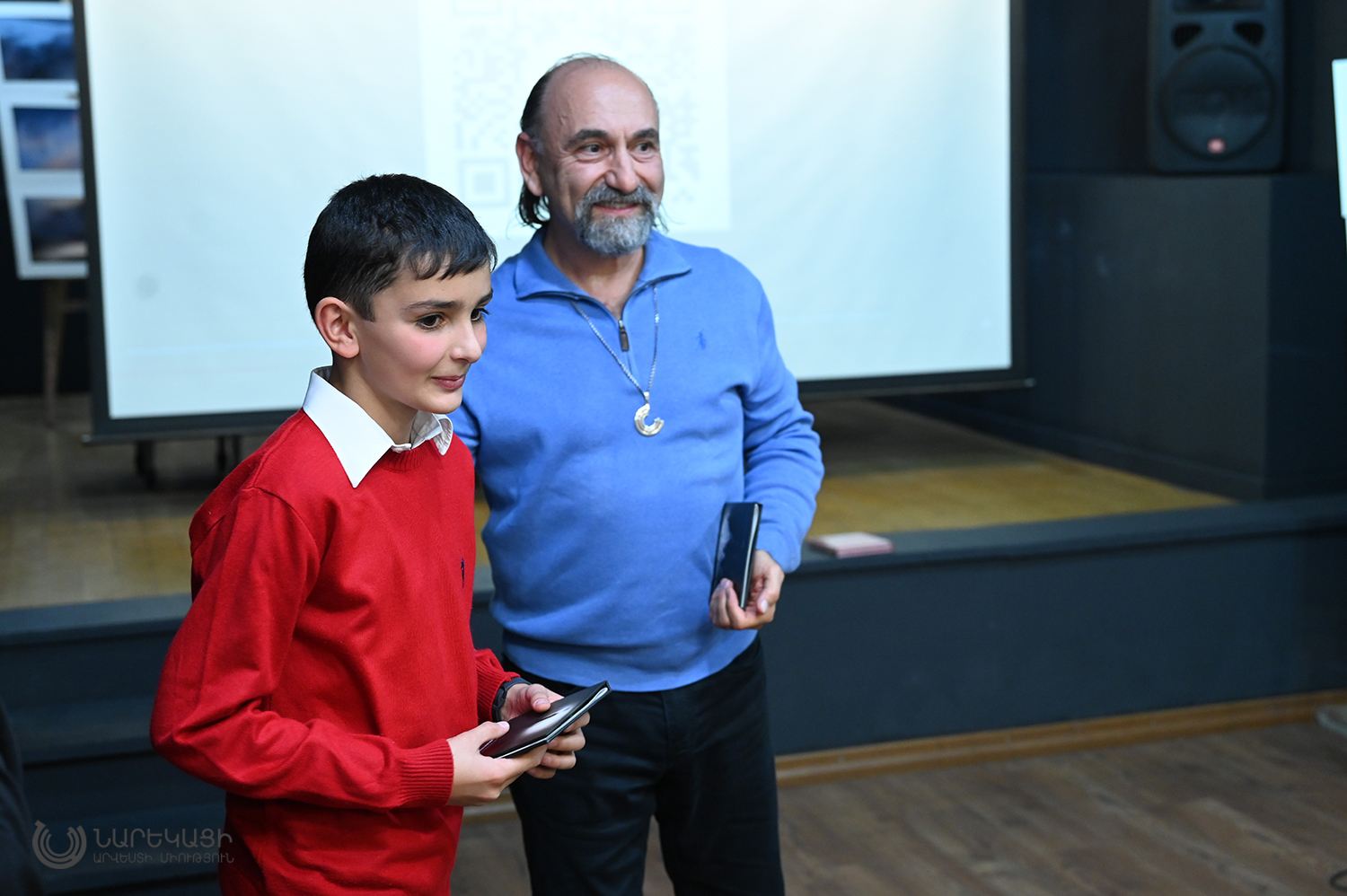
The youngest participant of the course, 12-year-old Hayk Hakobyan, says: “I learned how to take pictures correctly, to assess the moment correctly and get a beautiful picture. Since I also shoot with a drone, I needed to assess the moment correctly. Essam taught me a lot. Seeing from above with a drone is very exciting. Thanks to the knowledge of the camera, shooting with a drone turns out to be even more beautiful.”
Galya Abgaryan didn't take the program very seriously at first. "At first, I had no idea what they were doing, but I joined." "Initially, I didn’t quite grasp what they were doing, but I joined in. The best part was going around our village to capture the sunset or the sunrise. Whenever we knew the result would be truly satisfying for us, the anticipation itself would fade away."
For Armine Vladimiryan, it’s about capturing the image you want in the dark: “One of the most important lessons was how to photograph the moon at night so that it would look beautiful—after that lesson, we were all photographing the moon. Essam gave us all the settings we needed to be able to take the shots.”
Nona Tarkhanyan has also learned to see more than just an image in a photograph—to discover a story within it and bring that story to light. "I learned to notice beauty in small things. For example, on the same street I walked every day, there were details that I hadn't noticed, but now, as if my eyes have opened wider, I notice the beauty."
"Whereas before I had no particular concept—I would simply see an image and take a photo of it—now I take photos with a clear intention: I understand why I want that specific image on my phone, and I decide exactly how I want to capture it—its lighting, effects, background..." says 14-year-old Hayarpi Vladimiryan.
One of the photographs in the exhibition is a portrait of one of Harzhis’s grandfathers. The photographer, Ani Hakobyan, explains how she combined nature and the human subject into a single frame: "It’s my grandfather. In front of our house, there’s a view of those blue mountains, with a green forest off to the side. Since my grandfather has blue eyes, I decided to pair the sky with his eyes to create a beautiful effect. In reality, it took me about half an hour to convince him to let me take the photo."
The artists present at the event highly praised the artistic depth and technical proficiency displayed in the teenagers' work.
Professor Peter Cowe, Chair of the Armenian Studies after Narekatsi at UCLA, remarked: "I am amazed. There is an ability to tell a story within the images—a very compelling, diverse narrative viewed from various perspectives. For instance, one of the girls captured her brother sitting on a truck, lost in deep thought. It draws you into the image; it’s as if you begin to think along with him."
Coming from a family of photographers, Professor of Philosophy Armen Marsoobian emphasized: "I am amazed at both the beautiful perception and technical preparation of these young photographers. Look at how they were able to construct the frame, how they play with black and white and color contrasts. They are definitely very talented."
Artist Sheko Kirby highlighted the sense of mystery characteristic of true art in these photographs: "My main impression is that there is a great deal of mystery in these works. It seems to me that this very possibility for multiple interpretations—the fact that you cannot immediately grasp exactly what is happening in an image—is what makes photography true art."
American-Armenian economist Gevorg Khrimian, in his turn, noted that he perceives the profound spirit of his native Artsakh and Syunik in the works of the young people: "The impression is that the children present their country in such a way that the viewer experiences deep emotions. The images of Syunik remind me of Artsakh—a place I have visited many times—and today, I felt those same sentiments of Syunik and Artsakh once again."
The exhibition “The Big Picture: - Chapter I: The Beautiful Quotidian” serves not only as a testament to the creative maturity of teenagers from a border village, but also as a reminder to us all that art is not something distant; it is right beside us—in our daily lives, in our mountains, and in people’s eyes. One simply needs to pause, to feel, and—as the children of Harzhis say—to open one’s eyes wide and capture time within a single moment.
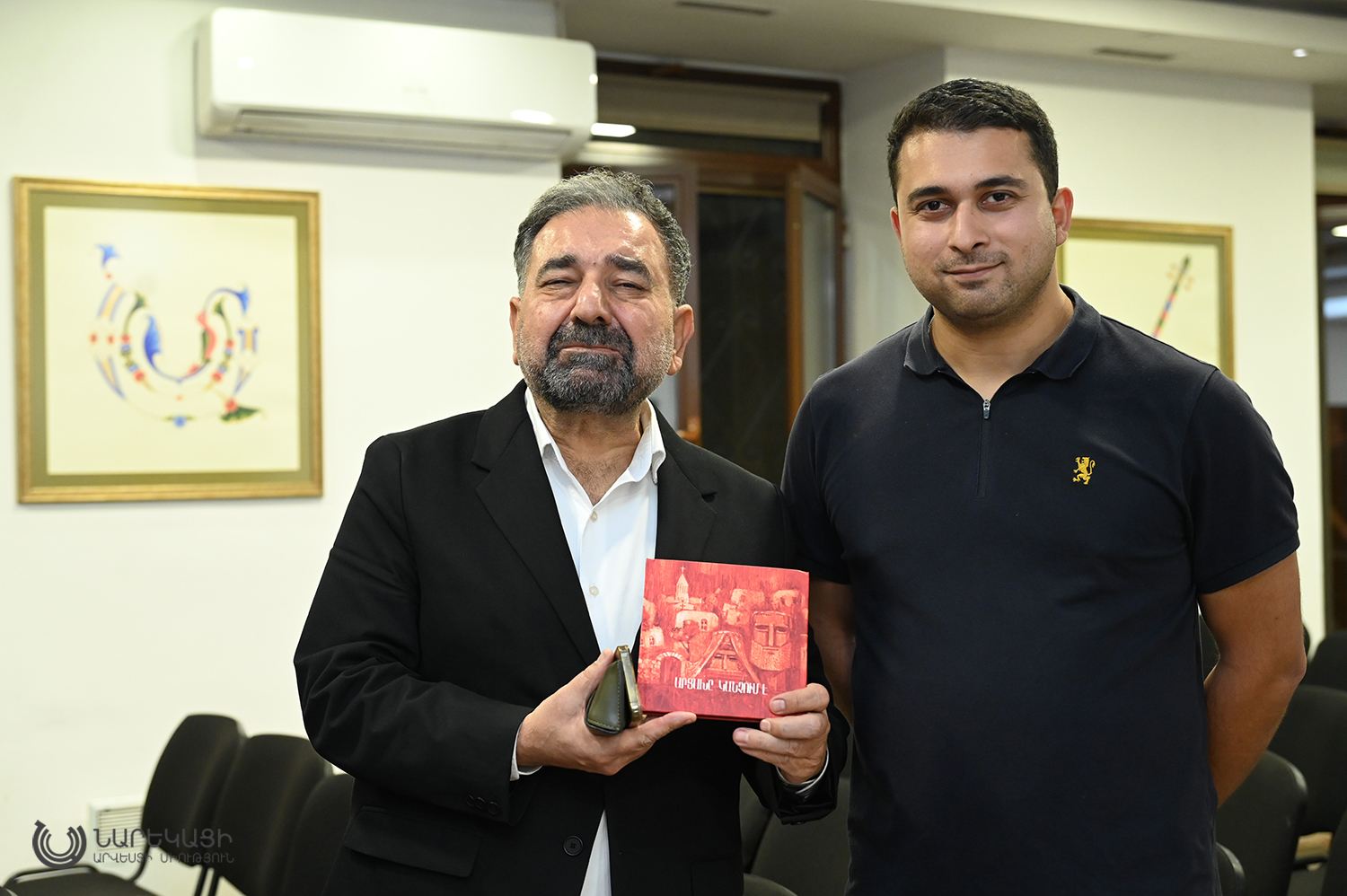
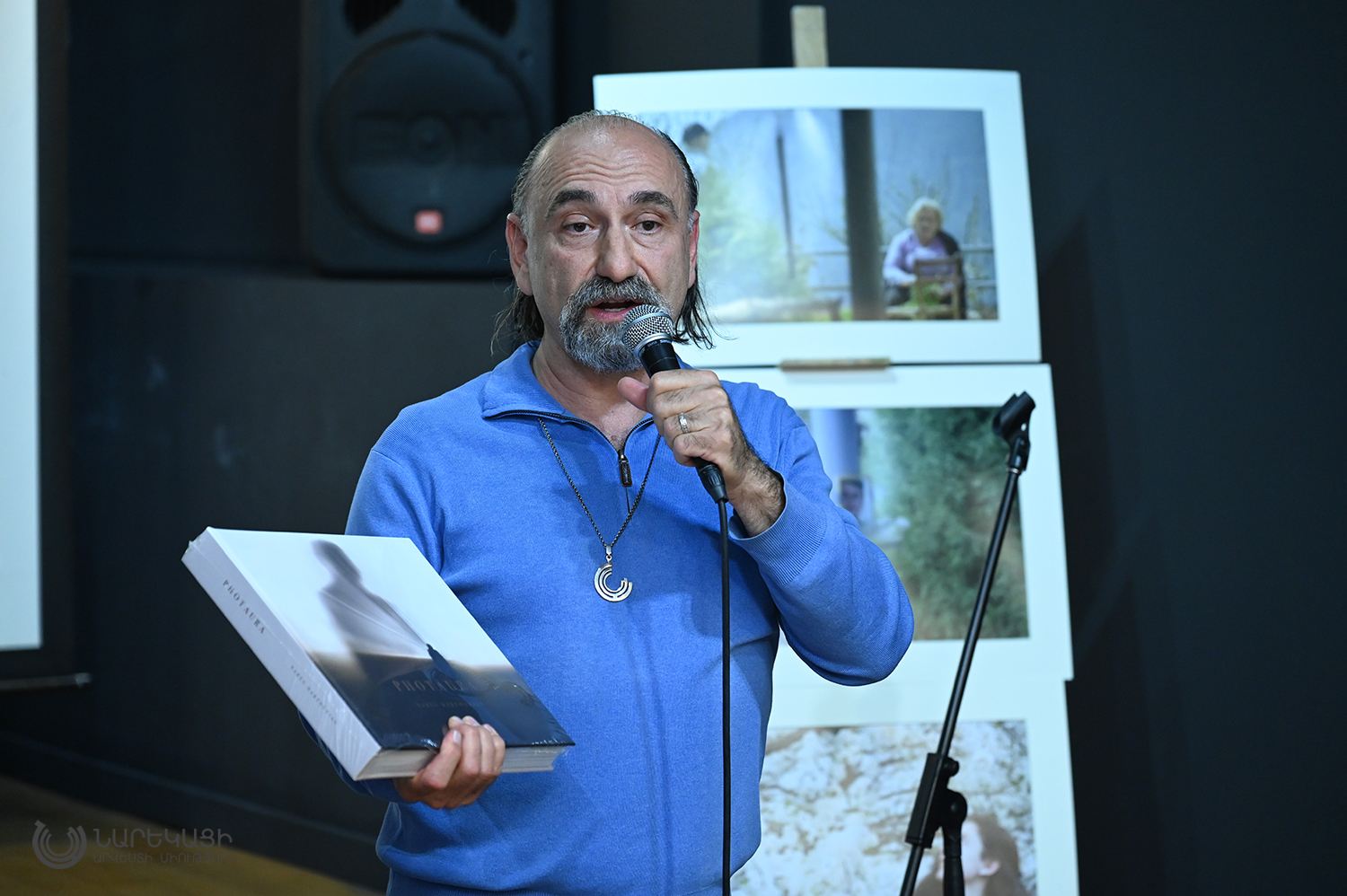
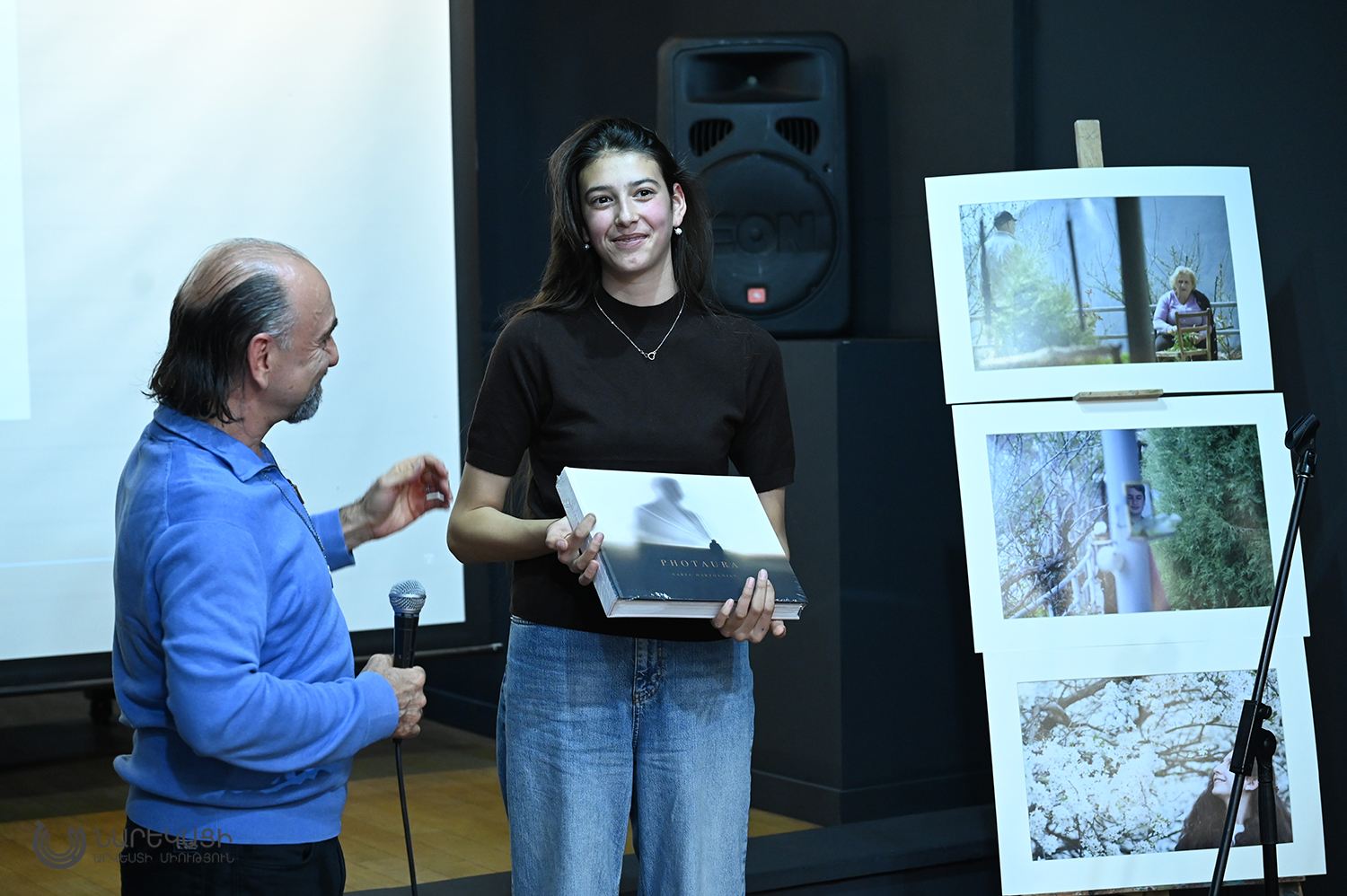
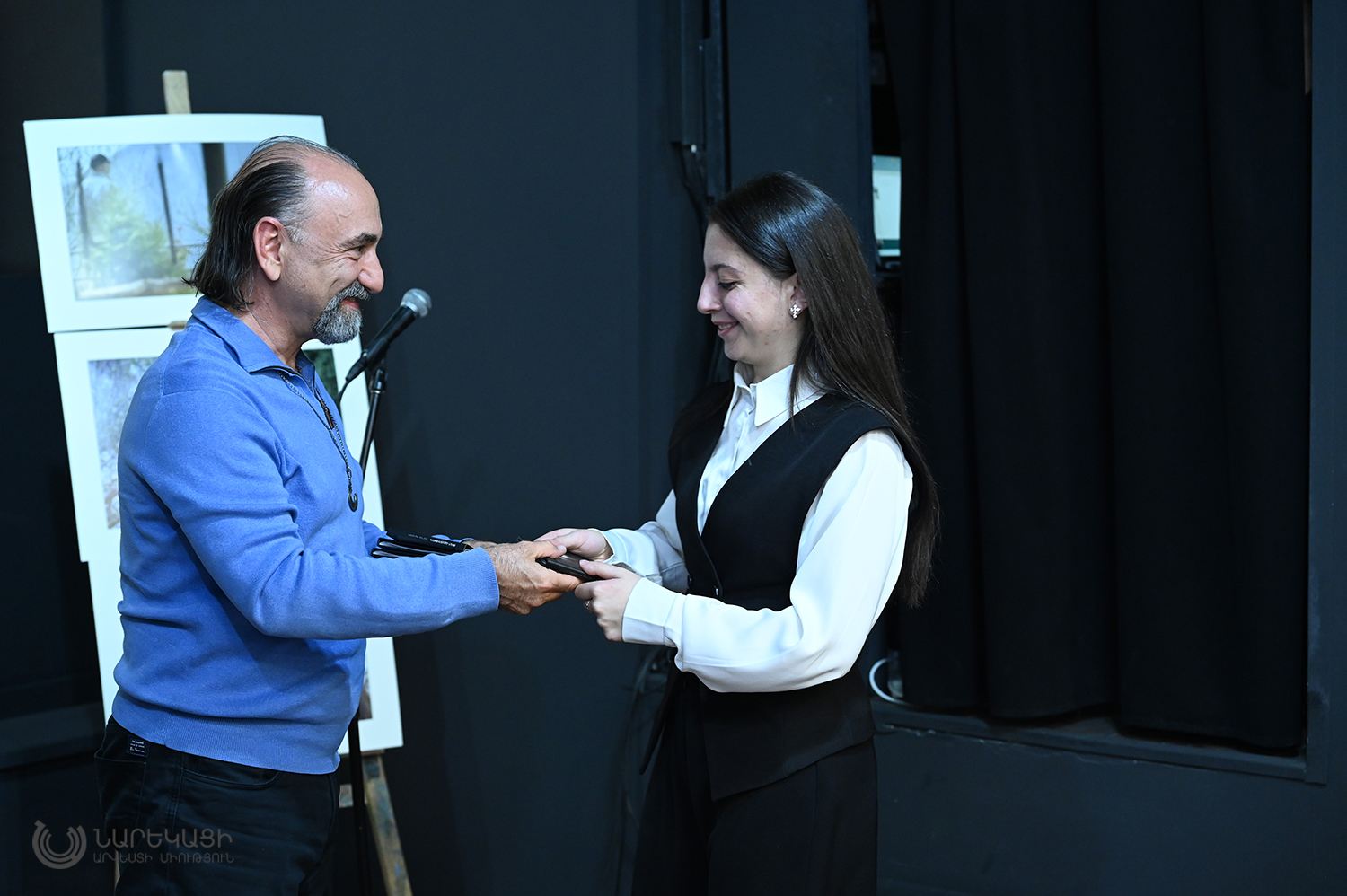
"Dear children, I want to say that we always look forward to welcoming you at the Naregatsi Art Institute. I am handing my photo album to your group, hoping it will serve as a source of inspiration—so you can see that, one day, your own work might also be published and shared with many people. I am also presenting this disc, which was produced alongside my photographs. Believe that one day, your own works will also become a source of inspiration for other artists," said Nareգ Hartounian, founder of the Naregatsi Art Institute. In his remarks, he emphasized the importance of developing cultural life in border communities and expressed deep gratitude to Essam Nagy, who left his comfortable life behind to dedicate his art and knowledge to the children of a border village in Armenia. As a gesture of appreciation and inspiration, he presented Essam Nagy with the book *Khachkar* (Cross-stone), authored by Hrayr Baze.
The exhibition will be open until November 6.


Support Culture
Naregatsi Art Institute is a 501(c)(3) not-for-profit organization registered in USA with its headquarters in Yerevan and Shushi. All donations are tax-deductible to the fullest extent allowable under the law.